
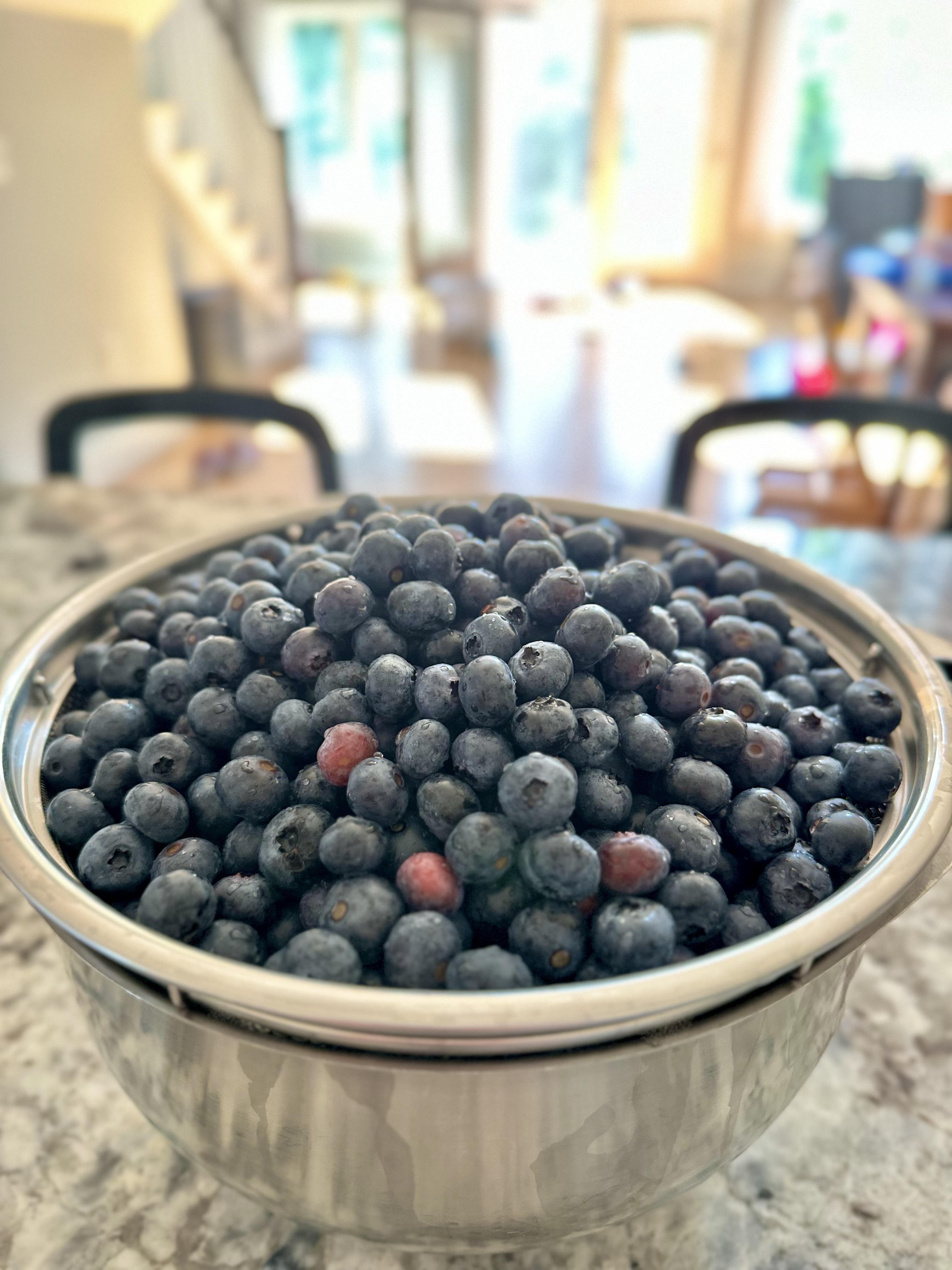
How to Wash Fresh Blueberries After Picking (and Keep Them Fresh Longer)
There’s nothing quite like coming home after a morning of blueberry picking in Maine with a basket full of fresh, sun-ripened blueberries. Whether you’re planning to enjoy them by the handful, bake a pie, or freeze them for winter, taking a few extra minutes to clean and store your berries properly will help you enjoy every last one.
Fresh blueberries come straight from the field, so it’s perfectly normal for them to have a little dust, pollen, the occasional leaf, or even a tiny hitchhiker from nature. A quick rinse is all it takes to have them ready for your kitchen.
The Best Way to Wash Fresh Blueberries
The simplest method is often the best.
Place your blueberries in a colander and rinse them gently under cool running water, using your hands to lightly move the berries around. This removes field dust, pollen, and other natural debris while keeping the delicate berries intact.
If you’re planning to eat your blueberries right away, this is the method we recommend most often.
Looking for an Extra Cleaning Step?
If you’d like an extra cleaning step, you can soak your blueberries in a baking soda solution before giving them one final rinse.
Simply mix:
- 1 teaspoon baking soda
- 2 cups cool water
Allow the blueberries to soak for 10–15 minutes, then rinse thoroughly under cool running water.
Research has shown that a baking soda solution can help remove more surface residues than water alone while still being gentle on fresh fruit.
Optional: Finish with a Vinegar Rinse
Some families also like to finish with a diluted white vinegar rinse, followed by one final rinse with clean water.
A simple mixture of 1 part white vinegar to 3 parts water can help reduce naturally occurring surface microbes before storage. Just be sure to rinse the blueberries well afterward so no vinegar flavor remains.
While this step is completely optional, some home gardeners and berry lovers like incorporating it into their post-picking routine.
The Secret to Keeping Blueberries Fresh
Here’s the tip that makes the biggest difference: Dry them completely.
Even perfectly clean blueberries won’t last as long if they’re stored wet.
Spread the berries out on a clean kitchen towel or paper towels and allow them to air dry completely before refrigerating or freezing. If you’re storing them in the refrigerator, a shallow container lined with a paper towel helps absorb excess moisture and can extend freshness.
What Should You Do with All Those Blueberries?
One of the best parts about blueberry picking Maine is bringing home enough berries to enjoy long after summer has ended.
Freeze Them
Blueberries freeze exceptionally well.
After washing (if desired) and drying completely, spread them on a baking sheet in a single layer until frozen. Then transfer them to freezer bags or airtight containers.
Frozen blueberries are perfect for smoothies, pancakes, muffins, oatmeal, and baking throughout the winter.
Make Homemade Blueberry Syrup
Fresh blueberry syrup is delicious over pancakes, waffles, cheesecake, vanilla ice cream, or stirred into sparkling water for a refreshing summer drink.
Bake Your Family Favorites
Fresh-picked blueberries are perfect for:
- Blueberry muffins
- Pancakes
- Coffee cake
- Crisps and cobblers
- Scones
- Blueberry pie
Make Homemade Jam
Capture a taste of summer by making blueberry jam or jelly. A few jars tucked into the pantry also make thoughtful homemade gifts.
Dehydrate for Healthy Snacks
If you have a food dehydrator, blueberries make delicious chewy snacks that are great in trail mix, granola, oatmeal, or salads. Learn more about dehydrating blueberries on our blog: How to Dehydrate Bluberries

A Little Care Goes a Long Way
Whether you came to Estes Berry Farm because you were searching for blueberry picking near me, you’re continuing a family tradition, or you’re visiting us for the very first time, we hope your fresh-picked blueberries bring a little taste of Maine into your home.
With a gentle rinse, careful drying, and proper storage, you’ll be able to enjoy your blueberries for days or preserve them to enjoy all year long.
We can’t wait to see you at the farm, happy picking!
Frequently Asked Questions
Should I wash blueberries as soon as I get home?
It depends on when you plan to enjoy them. If you’re eating or using them right away, go ahead and give them a gentle rinse under cool running water. If you’re storing them in the refrigerator for a few days, it’s best to wait to wash them until you’re ready to use them. Extra moisture can shorten their shelf life.
What’s the best way to wash fresh blueberries?
Place the blueberries in a colander and rinse them gently under cool running water while lightly moving them around with your hands. This removes field dust, pollen, leaves, and other natural debris while protecting the delicate berries.
Does baking soda help clean blueberries?
Yes. If you’d like an extra cleaning step, soak your blueberries in a solution of 1 teaspoon of baking soda mixed with 2 cups of cool water for 10 to 15 minutes. After soaking, rinse them thoroughly under cool running water.
Can I use vinegar to wash blueberries?
Some people like to finish with a diluted white vinegar rinse using 1 part vinegar to 3 parts water. If you choose this method, rinse the blueberries well with clean water afterward so no vinegar flavor remains.
Should I use soap or produce wash on blueberries?
No. Fresh blueberries should never be washed with dish soap, bleach, or household cleaners. Cool running water is all most families need, with a baking soda soak or diluted vinegar rinse as optional additional steps.
Why do blueberries have a white coating?
That soft white or silvery coating is called the bloom, and it’s completely natural. The bloom is a protective wax produced by the blueberry that helps keep moisture in and the fruit fresh. It’s perfectly safe to eat and easily rinses away with water.
How do I keep blueberries fresh longer?
The biggest secret is keeping them dry. If you’ve washed your blueberries, let them dry completely before storing them in the refrigerator. A shallow container lined with a paper towel helps absorb excess moisture and can help extend freshness.
How long do fresh blueberries last?
Fresh blueberries typically stay fresh for one to two weeks in the refrigerator when stored properly. Their shelf life depends on how ripe they were when picked and how they’re stored after bringing them home.
Can I freeze fresh blueberries?
Absolutely! Blueberries freeze beautifully. Once they’re completely dry, spread them in a single layer on a baking sheet until frozen. Then transfer them to freezer bags or airtight containers. Frozen blueberries are perfect for smoothies, muffins, pancakes, pies, and more.
Do I need to wash blueberries before freezing them?
That’s a matter of personal preference. Some people prefer to wash and thoroughly dry their blueberries before freezing, while others freeze them unwashed and rinse them just before using them. If you do wash them first, be sure they’re completely dry before freezing to help prevent ice crystals from forming.
Can you eat blueberries right off the bush?
Many people can’t resist tasting a few while they’re picking, and we don’t blame them! There’s nothing quite like a warm, sun-ripened blueberry straight from the bush. We do recommend giving the blueberries you bring home a gentle rinse before enjoying the rest.
Why are some blueberries sweeter than others?
Blueberries don’t all ripen at the same time. The sweetest berries are fully blue with no hint of red or green near the stem. Maine’s warm summer days, cool nights, and plenty of sunshine help create the wonderfully sweet flavor people look forward to each blueberry season.
What are some fun ways to use fresh blueberries?
Fresh blueberries are delicious by the handful. They’re also wonderful in muffins, pancakes, pies, crisps, smoothies, yogurt, oatmeal, homemade jam, and blueberry syrup. You can even freeze or dehydrate them to enjoy a taste of summer long after blueberry season has ended.
Leave a Reply